And most buildings aren’t ready.
Walk into a new co-working space in Shoreditch, and it looks like someone’s living room. Velvet sofas. Soft lighting. A kitchen island where the reception desk used to be.
Walk into a new luxury flat in Battersea and it feels like a members’ club.
Concierge. Controlled entry. Digital access management from a single app.
The industry calls this “resimercial” design. Residential comfort moving into the workplace. Commercial-grade systems moving into the home. I think it’s something bigger than a trend. It’s a permanent shift in how people expect buildings to function.
Here’s what I find interesting about it.
For twenty years, commercial properties invested heavily in access control, visitor management, audit trails, and integrated security. Residential properties got a mechanical lock and a doorbell. The gap was enormous.
That gap is closing fast, and it’s being driven by three things.
First, hybrid work. When your home is also your office three days a week, you start to expect the same infrastructure in both places. You want to know who’s at your door. You want remote access. You want a log.
Second, insurance. Underwriters are beginning to treat residential security the way they’ve always treated commercial. The smarter your entry system, the lower your risk profile. That calculation is only moving in one direction.
Third, property value. Developers building luxury residential schemes in London are learning what hotel groups figured out a decade ago: the entry experience sets the perception of everything that follows. A beautiful lobby with a flimsy front door tells a contradictory story.
The lesson for anyone in property, architecture, or development is that the old categories don’t hold any more. Residential buyers now expect commercial-grade security. Commercial tenants now expect residential warmth. And the access point, the front door, the lobby, the entrance, is where those two expectations collide.
Buildings that understand this will command premiums. Buildings that don’t will feel like they belong to a different decade.
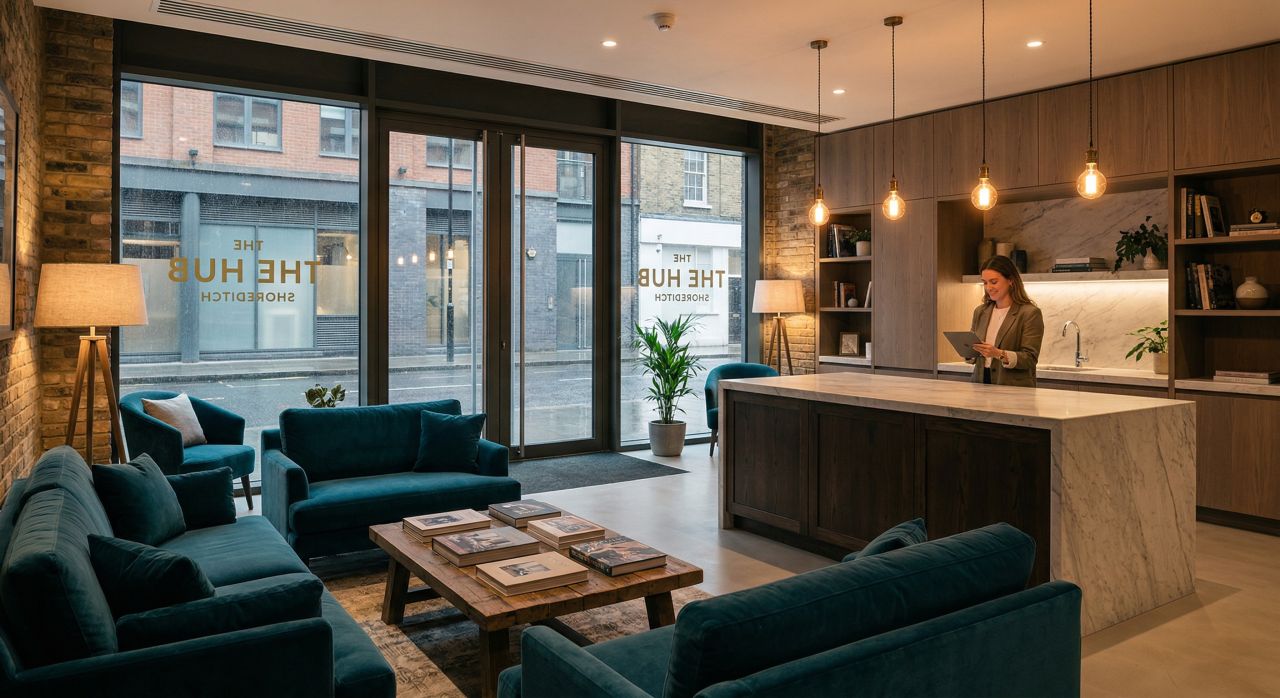
Ali Aydan: The line between commercial and residential is blurring.
•